



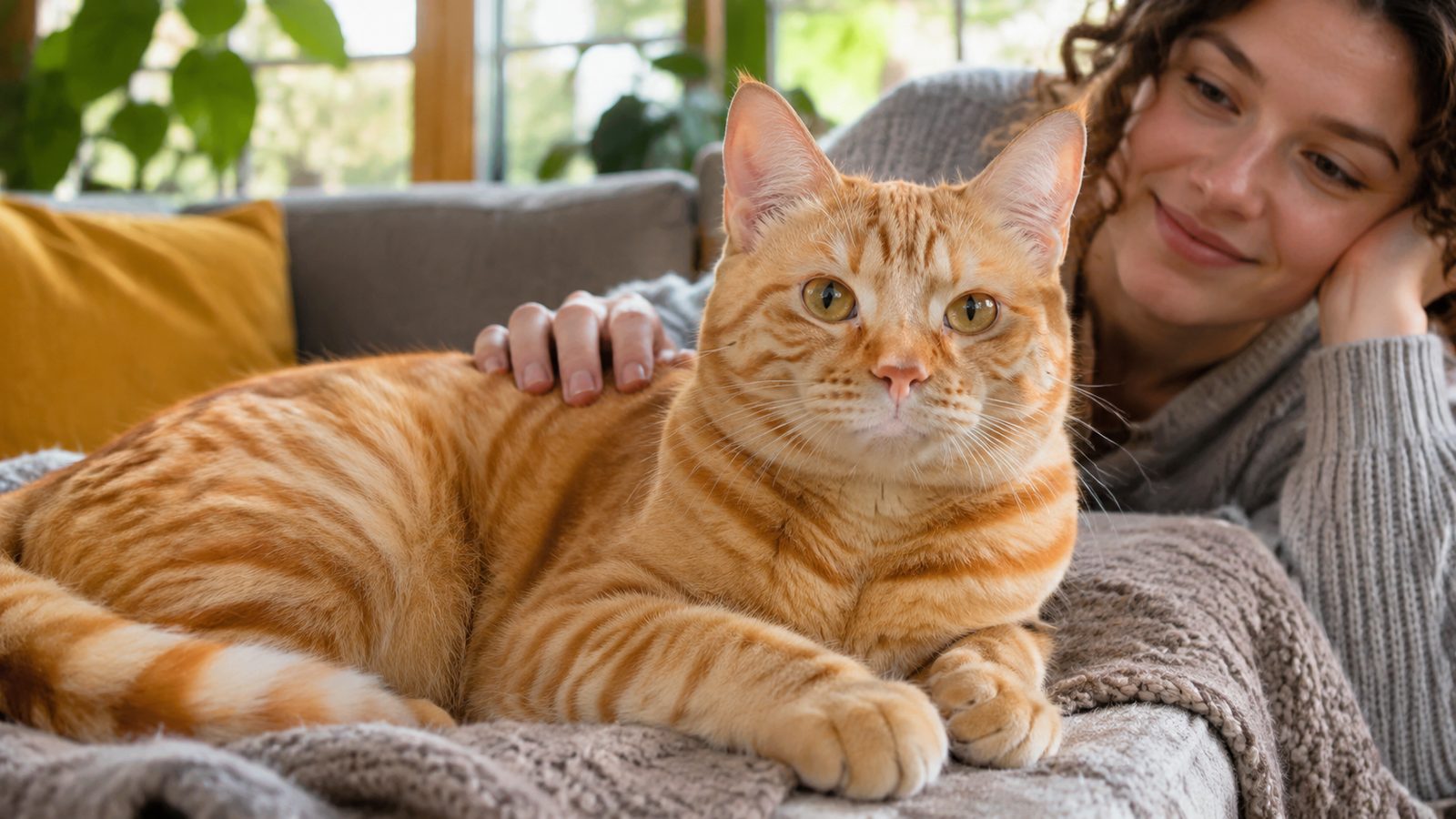
A tabby cat orange coat combines orange coloring with visible tabby markings. It does not describe a separate cat breed. Orange cats can belong to many breeds or have mixed ancestry. Their color also does not reliably determine their personality. Orange cats are especially interesting because their coloring has a strong genetic link to sex. Scientists also identified the molecular basis of orange fur in 2025. That discovery helped explain a trait cat geneticists had studied for decades.
Orange Tabby Cats at a Glance
| Question | Quick answer |
|---|---|
| Is an orange tabby a breed? | No. Orange describes color, while tabby describes a coat pattern. |
| Are all orange cats tabbies? | Tabby markings remain visible on orange coats, although some markings can look faint. |
| Are all orange tabbies male? | No. Females exist, but orange coloring is genetically easier to express in males. |
| What creates orange fur? | An X-linked genetic change affecting ARHGAP36 influences pigment production. |
| Are orange cats friendlier? | Coat color does not reliably predict personality. |
| What patterns occur? | Mackerel, classic, spotted, and ticked patterns are common classifications. |
| Do they need special care? | Their basic needs are the same as other domestic cats. |
| Can orange cats have white fur? | Yes. White spotting is controlled separately from orange coloring. |
Direct Answer
An orange tabby is a cat with orange or reddish fur that shows a tabby pattern. Orange is a color rather than a breed. Tabby describes markings such as stripes, spots, swirls, or ticking. Genetics also make orange coats more common in male cats.
Key Takeaways
* Orange tabby describes a color and pattern, not a breed. * Orange cats can have short, medium, or long coats. * The orange trait is linked to the X chromosome. * Female orange cats are possible, although they are less common. * Coat color does not guarantee a specific temperament. * Tabby markings may appear as stripes, spots, swirls, or ticking. * Good nutrition, exercise, indoor safety, and veterinary care matter most.
What Does Tabby Cat Orange Mean?
The phrase combines two different coat characteristics. “Orange” describes the reddish or ginger pigment in the fur. “Tabby” describes how markings appear across that colored coat. The Cat Fanciers’ Association describes orange as “red” in formal color terminology. Tabby patterns often include facial lines and markings around the eyes. Many cats also show rings on their tails and bars on their legs. A familiar “M” marking commonly appears on the forehead. These features can remain obvious even when body markings look faint. An orange tabby could be a domestic shorthair from a shelter. Another could be a Maine Coon or another recognized breed. Coat appearance alone cannot establish a cat’s ancestry. Breed identification requires more information than color and markings.
Why Are Orange Cats Often Male?
Orange coat color has an unusual connection with the X chromosome. Typical male cats have one X chromosome and one Y chromosome. A male therefore needs the orange-associated version on his single X chromosome. This makes full orange coloring easier to inherit. Typical female cats have two X chromosomes. A fully orange female generally needs the orange-associated variant on both chromosomes. A female with different versions on her two X chromosomes can develop tortoiseshell coloring instead. White spotting can create the familiar calico appearance. You may see claims that a fixed percentage of orange cats are male. These percentages often appear in pet articles. However, no globally representative modern study establishes one universal ratio. It is safer to say males are more common without presenting a fixed percentage.
The 2025 Discovery Behind Orange Cat Genetics
Researchers published an important orange-coat genetics study in Current Biology during 2025. They identified a roughly five-kilobase deletion associated with orange coloration. The change affects regulation of a gene called ARHGAP36. That finding solved a long-standing question in feline genetics. The genetic change affects pigment-producing cells called melanocytes. It alters pathways involved in the pigments that create reddish and yellow coloring. The same X-linked system also helps explain tortoiseshell and calico patterns. Those patterns involve different X chromosomes being active in different groups of cells. This discovery does not mean owners need genetic testing. Coat color remains an appearance trait for most household cats. The research mainly improves scientific understanding of feline pigmentation. It also explains why orange coloration behaves differently from many other coat colors.
Four Common Orange Tabby Patterns
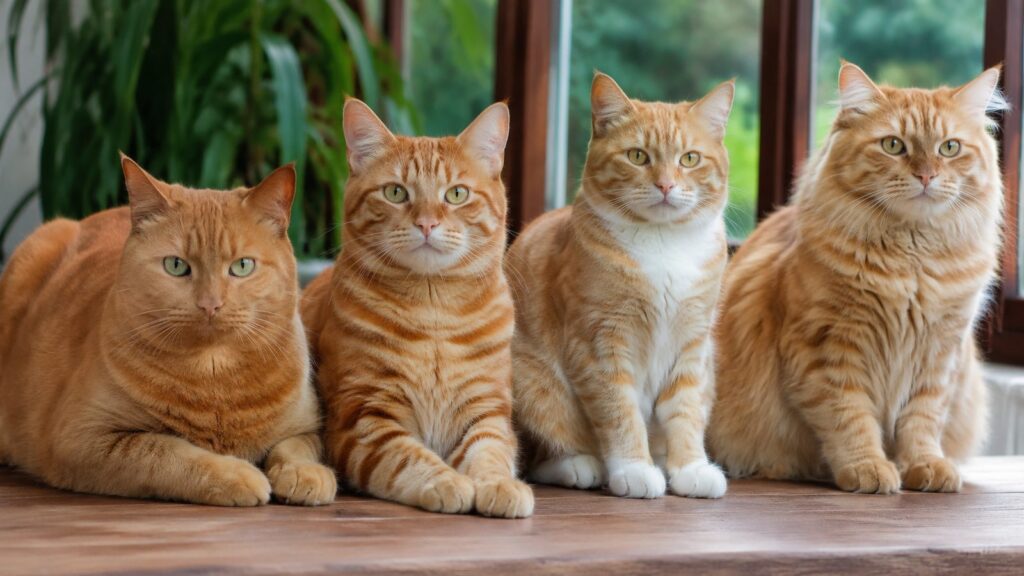
Orange cats can show several recognizable tabby patterns. Pattern names describe how darker markings appear against the lighter background. The Cat Fanciers’ Association recognizes four principal tabby patterns, with additional variations.
* Mackerel tabby: Narrow vertical stripes run down the sides. This creates the familiar tiger-striped appearance. * Classic tabby: Wide swirls form curved or circular shapes. The pattern is also called blotched tabby. * Spotted tabby: Markings break into spots instead of continuous stripes. Spot size and shape can vary. * Ticked tabby: Individual hairs have color bands. Strong body stripes may be reduced or absent.
Some classifications also discuss rosetted or marbled variations. These can appear in particular breeds and breeding programs. Pattern terminology may therefore vary between registries. The basic idea remains the same: orange and tabby describe separate coat features.
Are All Orange Cats Really Tabbies?
Orange cats normally retain visible evidence of tabby patterning. The markings may be bold on one cat and subtle on another. The CFA notes there is no truly pure red cat without tabby influence. Red kittens often show markings that may become less obvious with age. This explains why a cat can appear almost solid orange from across a room. Closer inspection may reveal tail rings, leg stripes, or forehead markings. Strong lighting can also make faint markings easier to see. The pattern did not suddenly appear because the observer moved closer. Orange-and-white cats follow the same principle. Their orange areas can carry tabby markings while separate genetics create white patches. White may appear on the chest, paws, face, belly, or larger portions of the body. Orange and white therefore describe another color combination rather than a separate breed.
Does Orange Fur Affect Personality?
Internet culture often portrays orange cats as affectionate, outgoing, chaotic, or unusually silly. Those descriptions can be entertaining. They should not be treated as biological rules. Current evidence does not show that orange coat color creates one predictable personality. Temperament develops from several influences. Genetics beyond coat color can matter, especially within established breeds. Early handling, socialization, living conditions, health, and individual experience also affect behavior. Two orange littermates may therefore behave quite differently. Owners choosing a companion should evaluate the individual animal. Spend time with the cat before adoption whenever possible. Ask shelter staff or foster caregivers about activity, handling, confidence, and social behavior. Color is a poor substitute for observing the actual cat. Veriibe also maintains a broader Pets section for readers interested in animal guides. The section includes care and ownership topics beyond cats. It can provide related reading after this guide.
What Breeds Can Have Orange Tabby Coats?
Orange coloring occurs across numerous pedigreed and mixed-breed cats. Examples can include American Shorthairs, Maine Coons, Persians, and other breeds. Domestic shorthairs and domestic longhairs can also have orange coats. Appearance alone does not prove membership in any breed. Breed matters more than color for predicting traits such as adult size or coat maintenance. A long-haired orange cat may need more brushing than a short-haired one. A large breed can also have different growth expectations from an average domestic cat. Owners should therefore identify care needs from the individual animal. Mixed-breed cats remain common companions across the United States. They can display the same orange pigments and tabby patterns seen in pedigreed cats. Pedigree papers are needed when formal breed identity matters. A coat description cannot replace documented ancestry.
Orange Tabby Health and Everyday Care
Orange coloring itself does not create a separate nutrition plan. Cats need complete, balanced food suited to their life stage. Cornell also recommends access to clean water and attention to healthy body condition. Excess body weight increases several feline health risks. Daily activity also matters, especially for indoor cats. Play can encourage movement and provide mental stimulation. Scratching surfaces, climbing options, hiding areas, and interactive toys can improve the home environment. The AVMA recommends enriched indoor living to reduce injury and disease risks. Preventive veterinary care should match the cat’s age and lifestyle. Vaccination, parasite prevention, dental health, and weight monitoring deserve regular attention. Sudden changes in appetite, thirst, weight, activity, or litter-box habits deserve veterinary advice. Cats can hide illness until problems become advanced. Orange cats can also develop harmless dark spots known as lentigo. These spots often appear on the nose or lips. A new raised, irritated, bleeding, or rapidly changing mark should still be examined. Owners should not assume every dark mark is harmless.
Feeding and Weight Management
Cats are obligate carnivores and require nutrients supplied by an appropriate feline diet. Food should be complete and balanced for the cat’s life stage. Portion needs vary with body size, age, activity, and health. Your veterinarian can help determine an appropriate feeding plan. Weight deserves special attention because obesity affects many household cats. Cornell reports links between excess weight and conditions including diabetes and joint problems. Male sex is also one recognized diabetes risk factor in cats. That makes weight management especially relevant for the many orange males seen in homes. Avoid making drastic calorie cuts without professional guidance. Cats can develop serious problems if weight loss happens incorrectly. Gradual changes are safer when a veterinarian recommends weight reduction. Regular weigh-ins can make subtle trends easier to notice.
Frequently Asked Questions About Tabby Cat Orange Coats
Is a tabby cat orange a specific breed?
No, it is a coat description rather than a breed name. Orange describes the fur color, while tabby describes the pattern. Cats with this appearance can belong to different breeds or have mixed ancestry.
Are orange tabby cats always male?
No, female orange cats do exist. Males are more common because the orange trait is X-linked. A male needs the relevant variant on one X chromosome, while a female usually needs it on both.
Why does my orange cat have an M on its forehead?
The forehead “M” is a common feature of tabby patterning. Related facial markings can frame the eyes and cheeks. Tail rings and leg bars are also common tabby features.
Are orange cats more affectionate?
Science does not support a universal orange-cat personality. People may perceive orange cats as friendly, but perception is not the same as biological causation. Individual history and genetics have stronger effects on temperament.
Can an orange tabby have white patches?
Yes, orange cats can also carry white spotting. The white areas may appear on the chest, face, paws, or larger areas. White spotting is separate from the genes responsible for orange coloration.
How long do orange tabby cats live?
There is no special lifespan created by orange coloring. Longevity depends more on genetics, health, environment, preventive care, and accident risk. Cornell notes that modern domestic cats can sometimes live into their twenties.
The Bottom Line
An orange tabby is best understood as a coat description, not a breed. Its appearance combines reddish pigment with tabby patterning. Modern genetics also explains why males are more common and how the orange trait works. The 2025 ARHGAP36 discovery adds important scientific detail. Personality should still be judged cat by cat. Good care matters much more than fur color. Balanced nutrition, healthy weight, indoor enrichment, preventive medicine, and daily attention support long-term wellbeing. Those basics apply whether your cat is orange, black, white, gray, or multicolored. If you’re choosing or caring for a companion animal, start with the individual pet’s needs. Veriibe’s pet guides offer more animal-focused reading. For an example of the site’s veterinary-source approach, see its guide to digestive signs in dogs. —
