



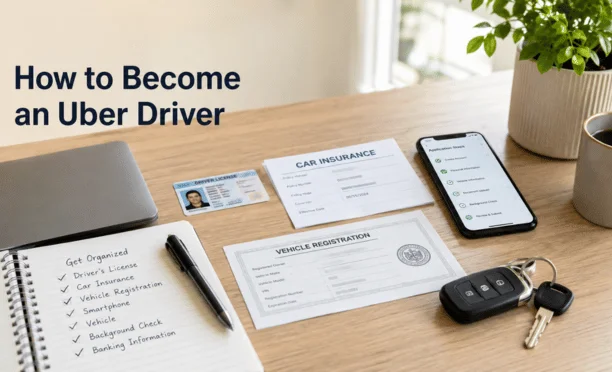
Signing up takes about ten minutes. Getting approved takes longer, and most people stall on the same three things: their age, their car, and their insurance. This guide covers how to become an Uber driver in 2026. It uses the rules Uber and the cities publish today, not the recycled advice about being 21 with a clean record. Elsewhere on the site, we look at Ross Lynch.
Short answer: check your state’s minimum age, confirm your car is 15 model years old or newer with four doors, then line up insurance. Sign up in the driver app and upload your license, registration, and insurance. Screening usually takes up to seven business days. New York City adds a separate license first.
What the platform checks before it lets you drive
| What gets checked | What it means in 2026 |
|---|---|
| Your age | 23 in around 30 states, 25 in 17 states plus California and Florida |
| Driving history | One year of US-licensed driving, or three years if you are under 25 |
| Your car | 15 model years old or newer, four doors, five factory seats and belts |
| Your documents | US driver’s license, proof of residency, registration, proof of insurance, profile photo |
| Your record | Motor vehicle report plus criminal history, run by Checkr, HireRight or Samba Safety |
| Timing | Allow up to seven business days once screening starts |
| Local license | New York City requires a TLC driver’s license before your account switches on |
TL;DR: key takeaways
- The old “21 and up” rule is gone in most of the country. Check your own state before anything else.
- A 2011 model year car scrapes in during 2026. A 2010 does not.
- Your personal auto policy almost certainly excludes driving for hire. Fix that first.
- Startup costs are close to zero in most cities and around $700 in New York City.
- Track every mile from day one. The IRS rate is worth more than most people realize.
What you’ll need before you apply
Get these five things in one folder before you open the app. Half of all stalled applications come down to a document that expired or a photo that wouldn’t upload.
- A valid US driver’s license, current and unrestricted
- Current vehicle registration, which does not have to be in your name
- Proof of insurance listing that vehicle
- Proof that you live in the city or state you plan to drive in
- A clear head-and-shoulders profile photo taken against a plain background
How to become an Uber driver in 8 steps
- Check the minimum age for your state. This is the rule that has moved most. The floor is 23 in roughly 30 states, including Texas, Georgia, Illinois, and Ohio. It rises to 25 in 17 states, and California and Florida also require 25. Confirm yours before you spend an evening scanning documents.
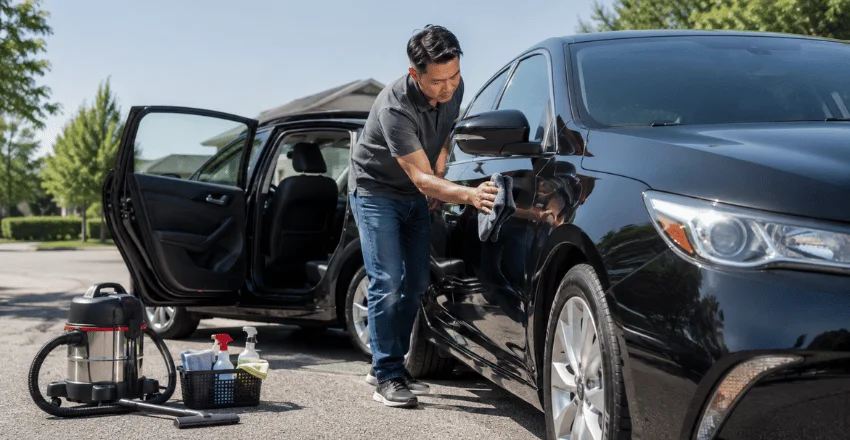
- Get your car past the model year and condition rules. You need four doors that open independently, five factory-installed seats and belts, working windows and air conditioning, and a build year within 15 years. Salvage and rebuilt titles are out, as is any commercial branding. If you are shopping for something that qualifies, compare rates on a used car loan before you sign anything, because the monthly payment eats your margin every single week.
- Line up your insurance before you apply, not after. Most personal auto policies exclude carrying passengers for money. Call your insurer, say the words “rideshare endorsement,” and ask what it adds to your premium.
- Clear any city or state license first. Most of the country has nothing extra. New York City is the big exception, and a handful of airports and municipalities run their own permit systems. Search your city name plus “TNC permit” and read the regulator’s page, not a forum thread.
- Create your account and upload every document in one sitting. Photograph documents flat, in daylight, with all four corners visible. Blurry corners are the single most common reason an upload bounces back.
- Pass the screening. Once it starts, allow seven business days. Multiple addresses in the last seven years, a court backlog, or a slow DMV can stretch that to two or three weeks.
- Complete the vehicle inspection and wait for your decal. Many cities want an annual inspection at a Greenlight Hub or an approved shop. Your airport decal arrives by mail within seven business days and belongs on the passenger side of the windshield, facing out.
- Turn the app on and start tracking mileage the same day. Not next week. Every untracked mile is money you hand back at tax time.
What the screening actually looks at
Two reports run side by side.
One is your motor vehicle record, where recent violations and at-fault crashes surface. Screeners read it for patterns rather than a single bad day, so a speeding ticket from four years ago rarely matters, while three in eighteen months will. The other report is a criminal history search. Credit never enters into it, and nobody looks at your score.
Some convictions disqualify you permanently, whatever the date. Uber names murder and sexual assault among them, alongside terrorism offenses. Pending charges can also freeze an account until they resolve in your favor, and in some cities the search reaches all the way back to your eighteenth birthday.
Drunk driving convictions are the usual sticking point, and they cut both ways for anyone who drives for a living. If you were the one hit by an impaired driver, what a DUI charge does to a crash claim is worth reading before you accept a settlement.
The insurance gap nobody warns you about
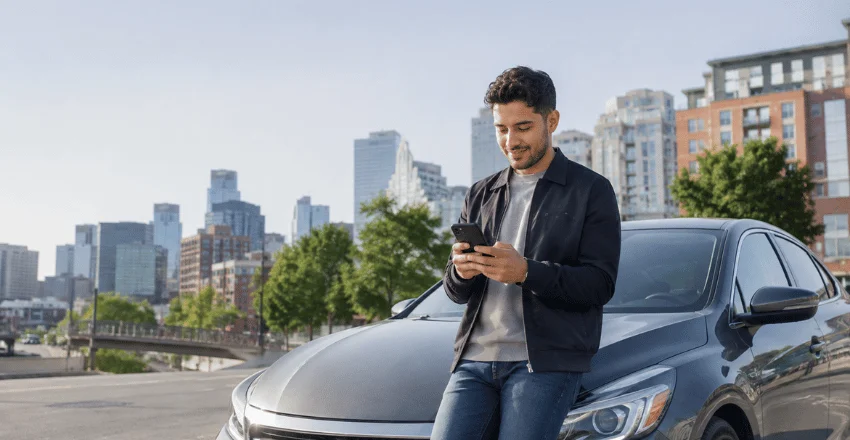
Your coverage changes three times during a shift. Offline, you are on your own policy. App on and waiting for a ping, you sit in the thinnest window of all. En route or carrying a passenger, the commercial policy is at its strongest. That middle window is where drivers get caught.
Uber’s contingent comprehensive and collision coverage only pays out on your own car if you already carry comprehensive and collision yourself. Liability-only drivers get nothing toward their own repairs. A rideshare endorsement closes the gap, and it usually costs less over a year than a single deductible.
What it costs to get started
In most American cities, the honest answer is close to nothing. You already own the car, the inspection is usually under $50 where a city requires one, and the app is free. New York City is a different proposition, and the Taxi and Limousine Commission publishes every figure.
| New York City requirement | Who you pay | Cost |
|---|---|---|
| TLC driver license, three years | TLC | $252 |
| Fingerprints and photo | IdentoGO | $90.25 |
| Drug test | LabCorp | $34 |
| Three-day TLC course | Approved school | $245 to $250 |
| License exam | PSI Testing Services | $49 per attempt |
| Defensive driving course | DMV-certified provider | $25 to $75 |
That lands between roughly $695 and $750, and you get 90 days from your application date to finish all of it. Miss the window and the application is denied, fees included. The minimum age there is 19, which is lower than the rest of the state.
What you actually earn per hour
Gross and net are different animals. Driver-tracked data for 2026 puts gross earnings somewhere between $20 and $25 an active hour in mid-size markets, before a cent of cost comes out. Take-home lands closer to $14 to $18 once gas, wear, depreciation, and the 15.3% self-employment tax are paid.
One number turns those two figures into something you can plan around. According to the IRS standard mileage rates, the business rate rose to 76 cents per mile on July 1, 2026. It sat at 72.5 cents for the first half of the year. Treat that as the federal estimate of what a mile costs you, and remember it is the deduction you claim on Schedule C.
Run it against a real trip. A $12 fare that covers nine paid miles plus four miles of empty driving to the pickup burns 13 miles. At 76 cents, those miles carry $9.88 of cost. The fare looked like $12. It behaved like $2.
That one calculation changes how you work. Long unpaid drives to a pickup and cross-town surges look worse once you price the miles.
Your first week on the road
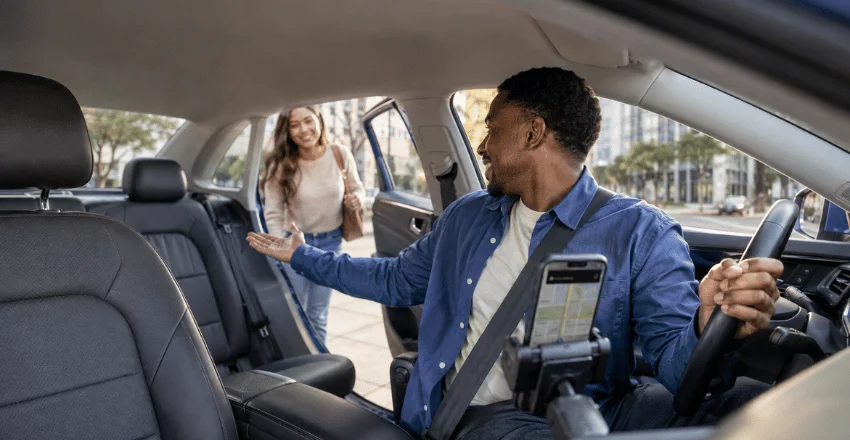
Start on a Friday or Saturday evening if you can. Demand is predictable, trips are short, and you learn the pickup geography of your city fast.
Keep a notebook for the first two weeks.
Write down which pickup spots waste your time and which hour of which night paid the best. After that, the notebook beats any online guide, because it describes your city rather than somebody else’s. Keep the decal on the windshield whenever you approach an airport, because enforcement there is real. And set a fuel rule for yourself, something like refueling below a quarter tank, so you never end a good hour hunting for a gas station.
Then there is your body. Eight hours in a driver’s seat is eight hours in one position, and drivers pick up the same complaints remote workers do. A few of the stretches that protect your neck and back take two minutes at a rest stop and save you a physical therapy bill later.
Your next step
Do the boring part tonight. Look up your state’s minimum age and check your car’s model year against the 15-year rule. Then call your insurer about a rideshare endorsement. If all three are clear, open the Driver app and upload your documents in one sitting. You could be taking trips in two weeks.
Frequently asked questions
Uber’s driver requirements page and its background check help article carry the national rules. Anything city-specific sits with your local regulator, such as the Taxi and Limousine Commission in New York City.
Yes. The registration does not need to be in your name, though the vehicle still has to meet every condition rule and be properly insured for the way you use it.
Not for standard rides in most of the country. New York City is the exception, where you need a TLC driver’s license and a for-hire or commercial class DMV license behind it.
Allow seven business days from the moment screening begins. Applicants who have lived at several addresses recently, or who apply during a hiring surge, often wait two to three weeks.
A car outside the 15-year window, a salvage title, an unresolved pending charge, unpaid tickets in cities that check, or a driving record with recent serious violations.
