



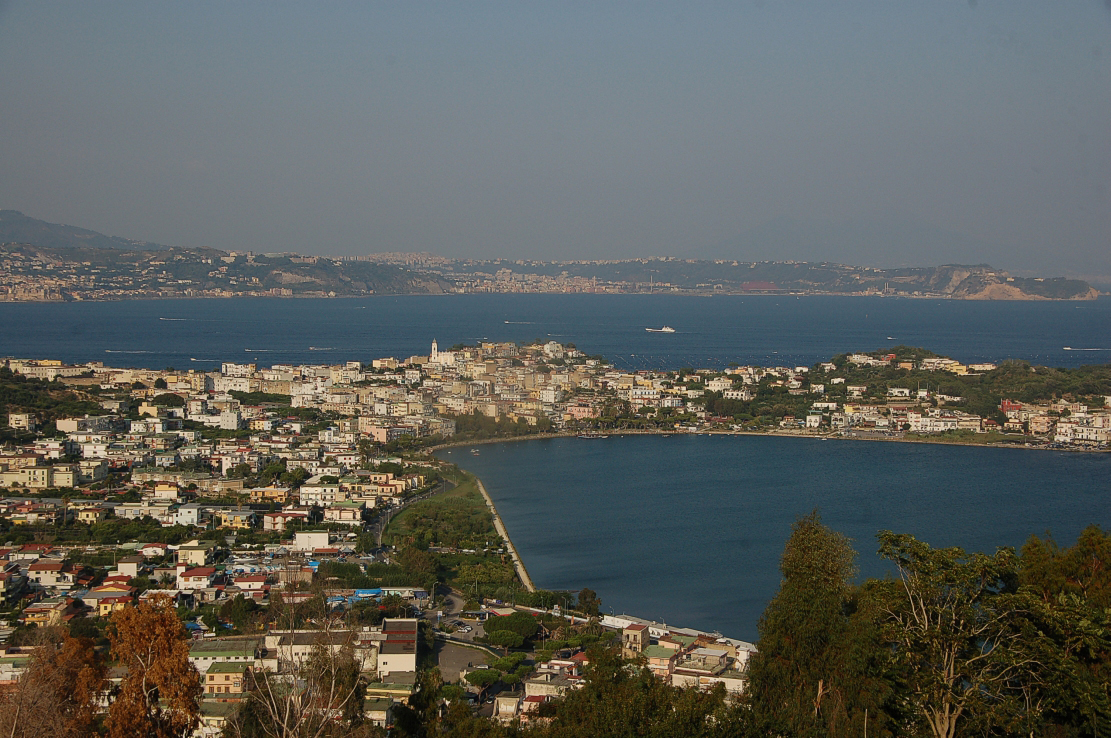
Located just west of Naples, Italy, the Campi Flegrei is one of the most fascinating volcanic areas in the world. Known for its remarkable geological features and rich volcanic history, this complex caldera has captured the interest of scientists, historians, and travelers alike. In this blog post, we’ll explore the unique characteristics of the Campi Flegrei, its geological significance, notable eruptions, and the current monitoring efforts aimed at understanding and mitigating potential risks.
What is Campi Flegrei?
Campi Flegrei, which translates to “Burning Fields,” is a large volcanic caldera complex measuring about 13 kilometers (8 miles) in diameter. It is situated on the western outskirts of Naples and includes numerous craters, fumaroles, hot springs, and volcanic features formed over thousands of years. This volcanic area is classified as a supervolcano due to its capacity for producing extremely large and explosive eruptions historically.
Unlike the more famous Mount Vesuvius, located to the east of Naples, Campi Flegrei is a caldera formed by the collapse of land following major eruptions, rather than a distinct volcanic cone. Its landscape is dotted with smaller volcanic edifices and brimming with geothermal activity, making the region a hotspot for volcanologists.
Geological Overview
The Campi Flegrei caldera developed over the last 40,000 years through multiple significant eruptions. The most notable event was the Campanian Ignimbrite eruption around 39,000 years ago, producing a vast ignimbrite sheet that covered much of southern Italy. This eruption is considered one of the largest in Europe during the Quaternary period.
Following this massive eruption, the caldera experienced several smaller but still impactful eruptions, reshaping the landscape and affecting local populations. The volcanic activity is driven by a magma chamber that lies several kilometers beneath the surface. Magma movements cause ground uplift and increased fumarolic activity, which scientists carefully monitor to predict possible eruptive behavior.
Historical Significance and Eruptions
Human history around Campi Flegrei is deeply intertwined with its volcanic nature. Archaeological evidence shows that ancient Romans were aware of the region’s volcanic activity. In fact, the area was revered and feared in classical mythology and ancient Roman culture, believed to be the gateway to the underworld due to its sulfuric gases and steaming fumaroles.
One of the more recent eruptions occurred in 1538, creating the Monte Nuovo, a new volcanic hill that dramatically altered the landscape. Since then, the area has not seen any major explosive eruptions, although it remains volcanically active. Minor seismic swarms and ground uplifts, such as the bradyseism events in the 20th century (notably in 1969–1972 and the 1980s), signal ongoing volcanic unrest, making continuous monitoring essential for public safety.
The Risks and Monitoring of Campi Flegrei
Because the Campi Flegrei area is densely populated, with millions of people living in and around Naples, volcanic hazards pose a considerable risk. Potential threats include explosive eruptions, lava flows, pyroclastic flows, ash fall, and gas emissions. Even smaller eruptions or phreatic explosions could cause significant disruption to the area.
To safeguard the population, scientists from institutions such as the Italian National Institute of Geophysics and Volcanology (INGV) use a variety of tools to monitor the volcano. These include seismic networks, GPS for ground deformation, gas sensors, and satellite remote sensing. Early warning systems and evacuation plans are also developed to respond effectively if activity increases.
Why is Campi Flegrei Important to Science?
Campi Flegrei represents a unique natural laboratory for studying volcanic processes and supervolcano behavior. Its complex history offers insight into caldera formation, magma chamber dynamics, and eruption forecasting. Researchers around the world are fascinated by the interplay of geological forces in Campi Flegrei and how these forces might manifest in the future.
Moreover, studying Campi Flegrei contributes on a global scale to understanding the risks posed by supervolcanoes, which, although rare, can have catastrophic consequences. Insights gained here inform disaster preparedness strategies and improve volcanology models worldwide.
Visiting Campi Flegrei
For travelers, Campi Flegrei offers a remarkable blend of natural beauty, history, and geology. Visitors can explore archaeological sites such as the ancient Roman town of Baiae, known for its submerged ruins, or hike around volcanic craters and thermal areas filled with bubbling mud pools. The region’s proximity to Naples also makes it an accessible day trip for those interested in nature and history.
When exploring, it is important to follow guided tours and adhere to safety recommendations, as some zones may exhibit increased volcanic gases or unstable terrain.
Conclusion
The Campi Flegrei volcanic area stands as a testament to the powerful natural forces shaping our planet. Its vast caldera, active geothermal features, and compelling history make it an area of scientific and cultural importance. Awareness and study of Campi Flegrei are essential not only to protect the millions living nearby but also to enrich our understanding of volcanic phenomena worldwide.
Whether you are a volcanology enthusiast, a history buff, or simply a curious traveler, Campi Flegrei offers a unique glimpse into Earth’s volcanic heart — a vibrant region where the past and future of geological activity constantly unfold.
For more articles, explore our ” Real Estate ” category.
