



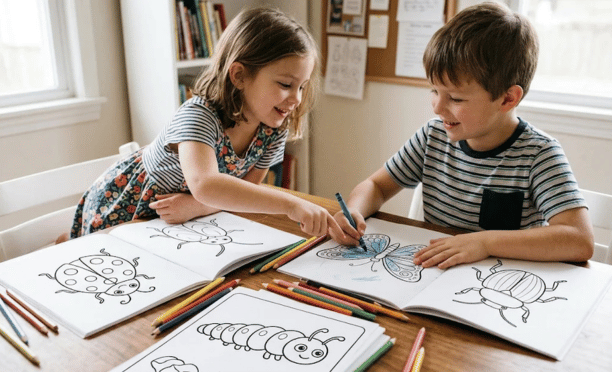
A bug coloring page gives children an easy way to mix art, nature, and imaginative play. Parents can use one during quiet afternoons, while teachers can add pages to spring or science activities. Simple insects also give younger children familiar shapes that feel approachable and fun.
Children can color ladybugs, butterflies, bees, caterpillars, beetles, ants, dragonflies, and other garden visitors. Designs with large spaces work well for preschoolers, while detailed scenes suit older children. A few crayons and a printed sheet can turn an ordinary break into focused creative time.
Quick answer: Bug-themed coloring sheets work well for preschool, kindergarten, home activities, classroom centers, and nature lessons. Choose large outlines for younger children and detailed garden scenes for older kids. Print on standard paper, provide crayons or pencils, and add counting, naming, or drawing activities for extra learning.
Bug Coloring Page Ideas at a Glance
| Idea | Best For | Difficulty | Extra Activity |
|---|---|---|---|
| Ladybug on a leaf | Ages 3–6 | Easy | Count the spots |
| Smiling bee | Ages 3–6 | Easy | Practice yellow and black patterns |
| Butterfly | Ages 4–8 | Easy, Medium | Create matching wing patterns |
| Caterpillar | Ages 3–6 | Easy | Count body sections |
| Ant trail | Ages 4–8 | Medium | Count the ants |
| Dragonfly | Ages 5–9 | Medium | Design colorful wings |
| Beetle | Ages 5–10 | Medium | Add shell patterns |
| Garden scene | Ages 6–10 | Medium, Detailed | Find and name each creature |
| Bug alphabet sheet | Preschool, Grade 1 | Easy | Practice beginning letters |
| Bug counting page | Preschool, Grade 1 | Easy | Count and compare groups |
Why Kids Enjoy Bug-Themed Coloring Pages
Bugs have shapes that translate naturally into simple coloring designs. Round ladybugs, striped bees, and segmented caterpillars provide clear spaces for young artists. Children can recognize these creatures without needing advanced drawing skills.
The theme also gives children freedom to experiment with color. A butterfly can use realistic shades or an entirely imaginary rainbow pattern. That freedom keeps the activity playful instead of turning it into a test.
Parents can also connect coloring with time outdoors. After finishing a page, children can look for similar creatures in a yard or park. Veriibe’s Education section can support other learning-focused activities and family-friendly topics.
15 Cute Bug Coloring Page Ideas
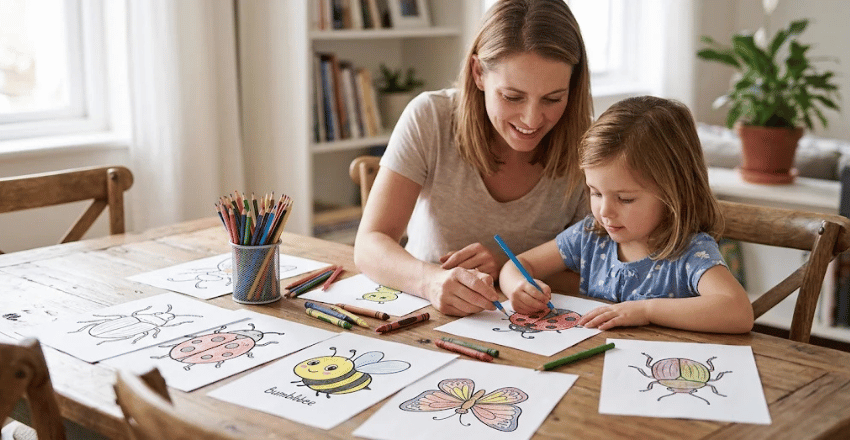
A good collection should include both simple creatures and more detailed scenes. That variety lets adults match the activity to a child’s age and attention span. These ideas can work as individual sheets or as one themed printable set.
- Ladybug on a leaf: Use large circles and simple spots for younger children.
- Bee near flowers: Add a few large petals without crowding the page.
- Butterfly with patterned wings: Leave open sections for stripes, dots, and shapes.
- Happy caterpillar: Create large body circles that are easy to fill.
- Ant carrying food: Add a leaf or crumb to encourage storytelling.
- Dragonfly over a pond: Include reeds, water, and a few simple clouds.
- Beetle with a patterned shell: Use geometric shapes for extra coloring choices.
- Firefly at night: Add stars and grass around the glowing insect.
- Grasshopper in a garden: Use leaves and flowers as supporting details.
- Snail beside a mushroom: Give the shell a large spiral for pattern practice.
- Bug picnic scene: Show several friendly creatures sharing a tiny outdoor meal.
- Garden bug hunt: Hide several insects among flowers and leaves.
- Bug alphabet page: Pair insects with letters such as B for bee.
- Bug counting sheet: Ask children to color and count groups of creatures.
- Build-your-own bug: Provide separate shapes for wings, spots, legs, and antennae.
These themes also work well for seasonal activity tables. Spring and summer naturally connect with gardens, flowers, and outdoor exploration. Veriibe readers can browse the Lifestyle section for more family and leisure inspiration.
How to Choose the Right Bug Coloring Page for Each Age
Preschoolers usually benefit from thick outlines and large open spaces. Too many tiny sections can make coloring frustrating before fine motor control develops. Friendly faces can also make unfamiliar insects feel less intimidating.
Children in early elementary grades can handle more background details. Flowers, rocks, grass, and multiple insects make the page more interesting. They can also complete small challenges while they color.
Older children may prefer realistic wings, shell markings, or patterned backgrounds. Detailed pages give them more opportunities to mix shades and create repeating designs. The goal should still be enjoyment, not perfect accuracy.
Easy Ways to Turn Coloring Into a Learning Activity
Coloring can support more than art when adults add a simple prompt. Keep the prompt short so it doesn’t interrupt the creative experience. One question or game is usually enough.
Try these easy extensions:
- Ask children to count spots, legs, wings, or body sections.
- Practice insect names before choosing colors.
- Compare flying creatures with those that crawl.
- Ask children which creature they might see near flowers.
- Let them draw a habitat around the finished insect.
- Write the first letter of each creature’s name.
- Create a short story about the pictured garden.
- Sort finished pages by wings, colors, or body shapes.
These activities can also encourage observation. Children begin noticing differences between shapes instead of seeing every small creature as the same. Adults can keep explanations simple and follow the child’s curiosity.
How to Print Coloring Pages for the Best Results
Standard white printer paper works well with crayons and colored pencils. US Letter paper measures 8.5 by 11 inches and is common in American homes and classrooms. Check the print preview before starting several copies.
Select “fit to page” when a design appears too close to the paper edge. Grayscale or black-and-white printing is usually enough for line art. This also avoids using colored ink before the child starts coloring.
Markers can soak through thin paper, especially when children color heavily. Place scrap paper underneath the sheet to protect the table. Heavier paper can be useful when finished artwork will become a card or decoration.
Creative Ways to Use Finished Bug Pictures
Finished pages do not need to disappear into a drawer. Children often enjoy an activity more when their work becomes part of something larger. A small display or craft can give the finished picture another purpose.
You could create a garden wall with several colored insects. Another option is to cut out each creature and glue it onto a larger poster. Adults should handle cutting when a child’s scissor skills are still developing.
The pictures can also become homemade flashcards or story prompts. Write a creature’s name on the back and ask the child to describe its colors. Families interested in animals can also explore Veriibe’s Pets section for more creature-focused reading.
Bug Coloring Activities for Home and Classroom Use
At home, printable sheets work well during quiet time, travel preparation, or rainy afternoons. Keep several designs available so children can choose their favorite creature. Choice can make the activity feel more personal.
Teachers can place sheets in art centers or use them after a nature lesson. Bug designs also fit spring units, garden topics, and basic counting practice. A completed picture can become part of a classroom display.
For group activities, give children different insects rather than identical sheets. They can compare colors and explain why they made certain choices. This creates conversation without turning the activity into a competition.
Simple Color Ideas for Popular Bugs
Real insects can inspire them, but children don’t need to copy nature exactly. Ladybugs are commonly associated with red and black, while bees suggest yellow and dark stripes. Butterflies offer far more room for imaginative combinations.
Try warm reds, oranges, and yellows for a bright garden theme. Blues, greens, and purples can create a calmer palette. Children can also choose one color family and use lighter or darker versions throughout the page.
Patterns make simple outlines more interesting. Add dots to wings, stripes to bodies, or tiny shapes inside larger sections. These additions are especially useful when the original design has broad empty areas.
Frequently Asked Questions
What age is a bug coloring page best for?
A bug coloring page can work for children from preschool through elementary school. Younger children usually need bold outlines and fewer details. Older children can enjoy realistic insects, patterned wings, and full garden scenes.
What bugs are easiest for young children to color?
Ladybugs, bees, butterflies, caterpillars, and snails are easy starting choices. Their bodies can be drawn with large, recognizable shapes. Simple designs also leave enough open space for crayons.
Can bug coloring sheets be educational?
Yes, they can support counting, vocabulary, pattern recognition, and basic nature discussions. Adults can ask children to name body parts or compare different creatures. Keep learning prompts short so coloring stays enjoyable.
Should children use realistic colors?
No, realistic colors are optional. A purple ladybug or rainbow caterpillar can encourage experimentation and imaginative thinking. You can show natural colors later if the child becomes curious.
What paper works best for printable coloring pages?
Standard copy paper is suitable for crayons and colored pencils. Heavier paper is helpful for markers, paint, or crafts that need more strength. Always check your printer settings before using specialty paper.
Make the Activity More Than a Coloring Sheet
A simple coloring activity can become a nature conversation, counting game, or storytelling prompt. The most useful pages give children enough structure to start without limiting their choices. Matching the design to the child’s age makes the experience easier and more enjoyable.
Choose one insect, print the page, and place a few favorite colors nearby. Add one small challenge, such as counting spots or drawing a garden background. That approach keeps the activity creative while giving children another reason to explore what they see.
